
Pros
CEIA Fiber Quality Control
CEIA began designing and producing solid-state metal detectors for textile machinery protection in the 1960s and has been delivering superior performance ever since, with high sensitivity and excellent immunity to environmental interference. To date, tens of thousands of CEIA TE instruments installed around the world protect textile machinery from damage that can be caused by metal contaminants, delivering ongoing reliability and stable performance.
When small pieces of metal, such as pins, needles, and staples, are accidentally introduced into the fabric during various processing steps, they can cause scratches, dents, or gouges in machine parts, such as the surface of the calender rollers, resulting in poor fabric quality and permanent damage to the machine. In such cases, production losses and repair work are costly.
With CEIA metal detectors, textile manufacturers can effectively protect their machines from metal contamination. The CEIA TE detector detects metal contamination at an early stage and automatically stops the machine to stop the rollers from rotating, thus preventing further contact with metal objects. This not only protects the equipment, but also maintains fabric quality and ensures the continuous operation of the textile production process.
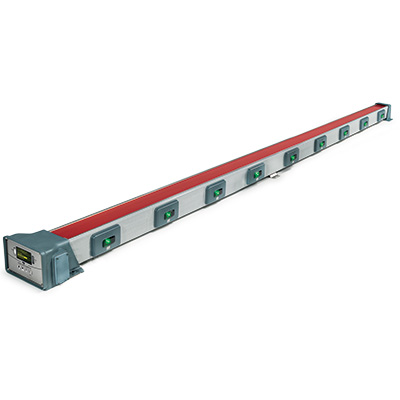
CEIA TE/MTZ
The CEIA TE/MTZ detector is the newest member of the CEIA family of industrial detectors for textiles, inheriting and enhancing the outstanding performance of the TE model, while providing the ability to identify and mark the passage zone of metallic contaminants at 300 mm intervals.
The detection zone covers the full width of the fabric and supports process feed rates ranging from 1 to 1500 m/min. Each section of the TE/MTZ detector operates independently of the other, each fulfilling the function of a single-zone TE detector with its own enhancements.
The new detector meets the requirements of Industry 4.0, which enables increased productivity and improved product quality. It is equipped with data logging capabilities and communication with external production PLCs and IT systems.
TE/MTZ detectors are available in several versions, with detection area widths ranging from 1300 mm to 4500 mm. The power system supports input voltages from 100 to 240 V to accommodate different power standards around the world.
TE/MTZ-LOGGER
Real-time display of next roll data
Generate data reports for each roll section


Address:220, Bugwang-ro, Sosa-gu, Bucheon-si, Gyeonggi-do, Republic of Korea
Representative : Cho Hun
Business license number : 113-22-11111